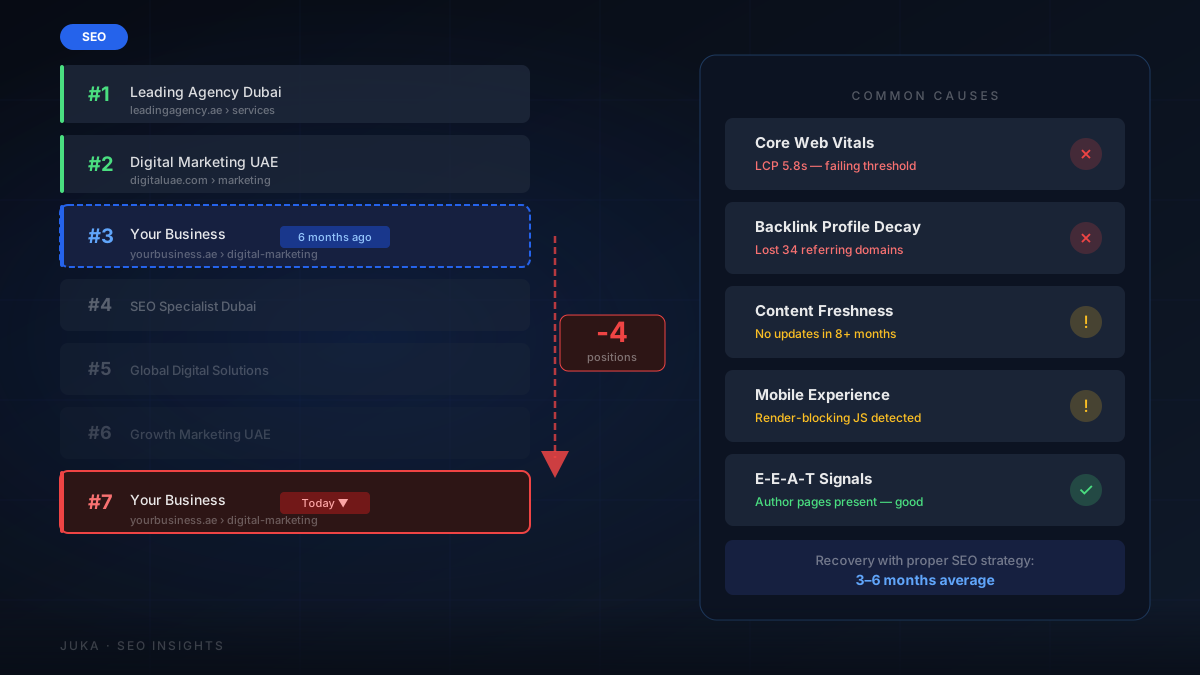
If your Dubai business website has slipped down Google’s search results over the past year, you’re not alone. We audit dozens of UAE business websites every quarter, and the same cluster of technical SEO mistakes keeps appearing. The good news: most are fixable within a week.
Ignoring Core Web Vitals
Google’s Core Web Vitals — Largest Contentful Paint, Interaction to Next Paint, and Cumulative Layout Shift — are direct ranking factors. A site that loads slowly on mobile, jumps around as it loads, or feels sluggish to interact with will rank lower than a comparable, faster competitor. Run your site through Google Search Console’s Core Web Vitals report and PageSpeed Insights. If your mobile score is below 70, prioritise image compression, lazy loading, and removing render-blocking scripts.
Thin or Duplicate Content
Many Dubai business sites have multiple service pages that say essentially the same thing with slightly different wording, or location pages copied from a template with only the city name swapped. Google identifies these as thin or duplicate content and either ignores them or, in severe cases, applies a quality penalty to the entire domain. Each page on your site should offer genuinely unique, useful information.
Missing or Broken Internal Links
Internal links distribute page authority across your site and help Google understand the relationship between your pages. Sites that launched with a small number of pages and grew organically often end up with orphaned pages — published content that nothing links to. Google may not discover or rank these pages at all. Conduct a regular internal link audit using tools like Screaming Frog or Ahrefs.
Not Optimising for UAE Search Behaviour
Searches in the UAE include significant Arabic-language volume even for English-language businesses. Google increasingly ranks pages based on language and location signals. If you’re targeting Dubai consumers but have no Arabic content, no hreflang tags, and no UAE-specific keyword targeting, you’re leaving a significant portion of your potential audience unaddressed.
Schema Markup Gaps
Structured data (schema markup) helps Google understand what your business is and what each page is about — enabling rich results like star ratings, FAQ dropdowns, and event listings in search results. These rich results dramatically increase click-through rates. LocalBusiness, Service, and FAQ schema are the highest-priority types for most UAE businesses.
Addressing these five issues systematically, rather than chasing algorithm updates, is the most reliable path to recovering and improving your Google rankings.